
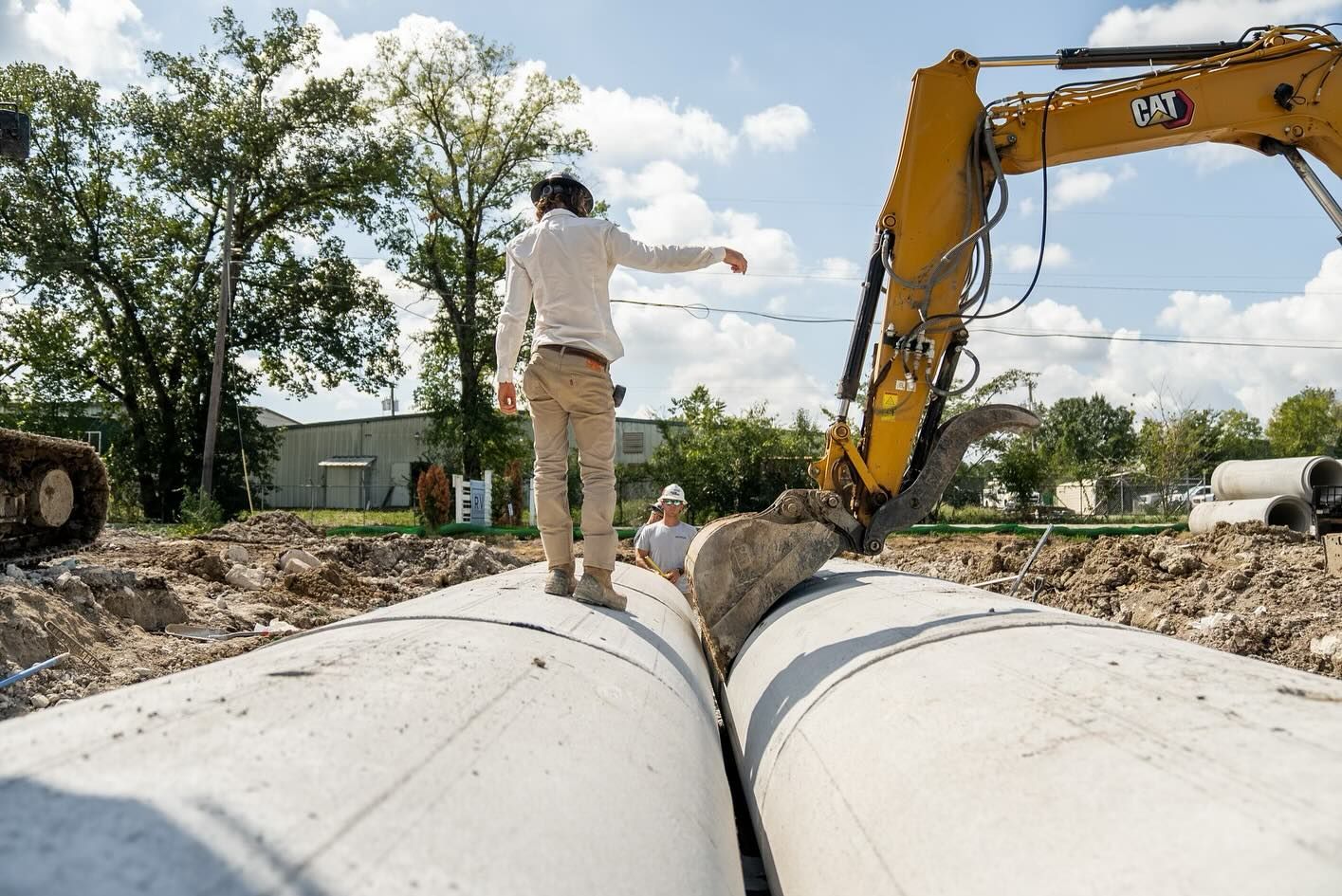
Precise Trenching for Underground Utility Lines
Stanley Excavation and Grading provides utility trenching services in Chattanooga, Tennessee and surrounding areas for new builds and property expansions.
When you are connecting water, sewer, electric, or gas lines to a new home or outbuilding in Chattanooga, Dalton, GA or a neigboring community, the trench must be dug to the correct depth and routed safely around existing utilities and structures. If the trench is too shallow, your lines will not meet code or could be damaged by surface activity. If it is too deep or poorly routed, you will waste time and money correcting the path before installation can proceed. Utility trenching also affects site access and landscaping, which means the work needs to be coordinated with your construction timeline and finished cleanly.
Stanley Excavation and Grading digs utility trenches to the precise depth and routing required for safe installation. This includes coordinating with utility providers, marking existing lines, and minimizing surface disruption so that your yard or driveway remains usable during construction. The team works efficiently to keep trenching aligned with your project schedule and ensures that lines are installed correctly the first time, which prevents delays and inspection issues in Chattanooga and the surrounding areas.
Schedule trenching services with Stanley Excavation and Grading to keep your project moving forward.
What Happens During and After Trenching
Utility trenching in the Chattanooga area begins with marking the route and confirming the location of existing underground lines. Stanley Excavation and Grading uses a compact excavator or trencher to dig a narrow, clean path from the utility connection point to your home or building. The trench is dug to the depth specified by code and graded to allow for proper drainage and bedding material placement.
Once trenching is complete, you will see a clean, straight path ready for utility line installation. The trench walls remain stable, and the base is free of rocks or debris that could damage pipes or conduit. After your utility provider or contractor installs the lines, the trench is backfilled and compacted to prevent settling, and the surface is restored to match the surrounding grade.
Stanley Excavation and Grading coordinates trenching with your builder and utility providers to ensure that installation happens on schedule. The team also handles spoil removal and site cleanup, which keeps your property accessible and reduces the impact on existing landscaping. If additional trenching is needed for changes to the route or added lines, the work can be completed without disrupting the rest of your project.
Homeowners and builders in Chattanooga often ask about depth requirements, coordination with utility providers, and how trenching affects the rest of the property. The answers below address the most common concerns that come up before digging starts.
Questions That Come Up Before Trenching Begins
If you are building a new home or expanding your property in Chattanooga, utility trenching ensures that water, sewer, electric, and gas lines are installed safely and to code. Stanley Excavation and Grading coordinates with your builder and utility providers to deliver precise, efficient trenching that keeps your project on schedule. Get in touch to schedule trenching services for your property.