
Hold Back Slopes and Reclaim Space
Excavation and site preparation for retaining wall construction that stabilizes sloped properties and prevents erosion.
When your yard slopes too steeply to use or erodes with every rain, a retaining wall creates usable space and holds the soil in place. You see the grade shifting, the exposed roots where topsoil has washed away, and the narrow strips of flat ground that limit what you can do with your property. A properly built wall changes the shape of your lot and stops the soil from moving downhill.
Stanley Excavation & Grading handles the excavation and site prep required before retaining wall construction begins. The work includes cutting into the slope to create a level base, removing unstable soil, and grading the area to ensure proper drainage behind the wall. Each site is prepared to integrate with drainage systems that prevent water from building up and pushing against the structure.
Request a retaining wall consultation to see how the wall will be positioned and what the site prep involves.
What happens before the wall goes up
The crew starts by excavating the slope to the depth and width needed for the wall's foundation. Loose or organic material is removed and replaced with compacted gravel that creates a stable base. The excavation also includes room for drainage pipe and backfill that will sit behind the wall once it is built.
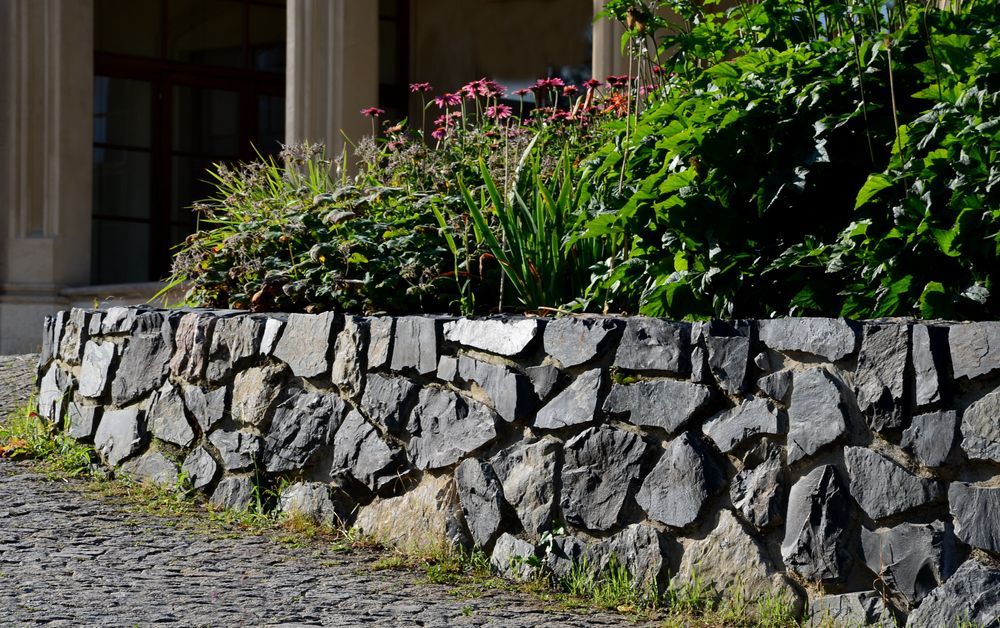
After the wall is installed, you see a defined edge where the slope used to roll away, flat usable yard space above or below the wall, and no more soil washing into lower areas. Retaining walls are designed to integrate with drainage systems so water does not build up behind the structure. Site prep is suitable for residential landscaping and structural support.
The grading work also accounts for how water will move across the finished surface, so runoff does not pool at the base of the wall or flood adjacent areas. If your property has multiple elevation changes, the prep can support terraced walls that step down the slope. The excavation does not include wall construction itself, but it ensures the wall will be built on solid ground with proper drainage in place.
Before scheduling site prep, most people ask about the scope of excavation, how drainage is handled, and what the finished result will look like.
What homeowners usually want to know
If your property has slopes that limit usable space or erode with every storm, retaining wall site prep gives you the foundation needed for a stable, long-lasting structure. Contact Stanley Excavation & Grading to schedule a consultation and see how the excavation and grading will be handled.